Tracked standard delivery throughout Thailand. It is free on orders of ฿1000 or more, and a flat ฿200 below that. Any product-specific lead time is shown on this page or confirmed after the order.
Changed your mind? Standard stock goods can be returned within 15 days of delivery, in the original packaging and with proof of purchase, for an exchange or refund. A non-refundable handling fee applies to change-of-mind returns and you cover the return postage. Cancelling before dispatch carries a 12.5% processing fee. Contact us with the order number first.
If it arrives faulty, damaged, incomplete or simply not what you ordered, we arrange the return at our cost and put it right. Those remedies are separate from the change-of-mind return above, and your rights under Thailand's Consumer Protection Act B.E. 2522 are not affected by it.
Outdoor Composter Enrich your garden beds without the need for chemical fertilisers...
The compost bin is made of high quality & durable PP material which is environmentally...
290L Container ส่งฟรีทั่วประเทศไทย Reduce landfill, reuse waste and create organic...
About this product
Garden Compost Bin
Supplied by Lawn Care Company Thailand for use in gardens and outdoor spaces across Thailand.
Garden Compost Bin
Order garden compost bin online for delivery across Thailand.
Check the product details and dimensions before ordering. Contact us if you need more information.
Where a measurement, material, compatibility detail or warranty term is not stated, contact us and we will verify it before you order.
Still deciding?
Not sure yet? That is fine.
Standard stock goods can be returned within 15 days of delivery for an exchange or refund, in the original packaging and with your proof of purchase. Contact us with the order number before sending anything back. A non-refundable handling fee applies to change-of-mind returns, and you cover the cost of the return postage.
If it turns up faulty, damaged, incomplete or simply not what you ordered, it is on us: we arrange the return at our cost and sort it out directly. Tell us as soon as you notice. Those remedies are separate from changing your mind. The full detail is on our refunds and returns page, and you can ask us anything before you order.
Why is an Outdoor Composter a smart long-term solution?
An Outdoor Composter continuously transforms organic waste into premium soil enhancer. Over time, enriched soil improves plant performance, reduces waste output and supports sustainable gardening year after year.
Does a Composting Container help reduce fertiliser use?
Compost from a Composting Container provides steady, slow-release nutrients that can cut chemical fertiliser use by up to 50% , improving soil health without synthetic overload.
How much effort is needed to run a Garden Compost Bin?
A Garden Compost Bin requires minimal attention, layer waste, monitor moisture and turn occasionally. Natural decomposition processes deliver consistent compost with limited manual involvement.
Can an Outdoor Composter boost biodiversity?
An Outdoor Composter encourages beneficial bacteria, fungi and earthworms. Healthier soil ecosystems attract pollinators and strengthen plant resilience, supporting a thriving garden environment.
Is a Composting Container better than discarding organic waste?
A Composting Container converts scraps into valuable soil conditioner instead of contributing to landfill. This reduces methane emissions and supports environmentally responsible waste management.
How does a Garden Compost Bin create nutrient-rich soil?
Micro-organisms in a Garden Compost Bin break down organic matter into humus rich in essential nutrients and trace elements. This natural fertiliser improves soil texture and long-term fertility.
Does an Outdoor Composter kill weed seeds?
A well-managed Outdoor Composter can reach 55, 60°C , temperatures capable of destroying many weed seeds and harmful organisms, producing cleaner compost for garden use.
Can a Composting Container improve lawn quality?
Compost produced in a Composting Container strengthens turf by enhancing soil structure and microbial life. A light top-dressing can promote greener, denser grass within a single season.
Why is airflow important in a Garden Compost Bin?
Oxygen fuels aerobic microbes inside a Garden Compost Bin . Good airflow prevents anaerobic conditions that cause odours and delays, maintaining higher temperatures for quicker organic breakdown.
Can an Outdoor Composter help suppress weeds?
Compost from an Outdoor Composter acts as natural mulch. Applying a 5, 8 cm layer blocks light, reducing weed germination while steadily enriching soil beneath.
What maintenance does a Composting Container require?
A Composting Container needs occasional turning, balanced layering and simple moisture checks. Just minutes each week can significantly accelerate decomposition and maintain high-quality compost output.
How does a Garden Compost Bin reduce carbon footprint?
A Garden Compost Bin diverts biodegradable waste from landfill, cutting methane production. Composting returns carbon to the soil, improving fertility while reducing overall greenhouse gas emissions.
Is an Outdoor Composter safe for food gardens?
Properly matured compost from an Outdoor Composter is safe for edible crops. Internal heat can exceed 55°C , helping neutralise many pathogens and weed seeds before application to vegetable beds.
Can a Composting Container handle garden clippings?
A Composting Container efficiently breaks down grass cuttings, hedge trimmings and leaves. Mixing fresh greens with dry browns prevents compaction, ensuring oxygen flow and faster compost maturity.
How does a Garden Compost Bin support sustainable gardening?
A Garden Compost Bin recycles organic waste into fertile soil improver, reducing landfill and synthetic inputs. This closed-loop approach builds long-term soil health and encourages biodiversity in your outdoor space.
Can an Outdoor Composter operate all year round?
An Outdoor Composter functions throughout the seasons. Although decomposition slows in cooler weather, microbes remain active. Thick organic layers help retain warmth, keeping composting progress steady.
Does a Composting Container produce unpleasant smells?
A healthy Composting Container smells earthy. Strong odours often signal excess moisture or too many greens. Adding dry leaves and turning the contents restores airflow and stabilises the composting process quickly.
What is the ideal balance in a Garden Compost Bin?
A Garden Compost Bin works best with about equal parts greens and browns by volume. This balance maintains oxygen flow, prevents unpleasant smells and sustains high microbial activity for efficient composting.
How does an Outdoor Composter improve plant growth?
Compost from an Outdoor Composter supplies slow-release nutrients and trace minerals. Enhanced soil biology supports root development and can noticeably improve flowering, foliage health and crop performance within one growing...
Is a Composting Container suitable for beginners?
A Composting Container is simple to manage, layer greens and browns, monitor moisture and turn occasionally. Natural bacteria and fungi handle decomposition, producing nutrient-dense compost with minimal ongoing effort.
Can a Garden Compost Bin help conserve water?
Compost from a Garden Compost Bin increases soil water-holding capacity by up to 30% , reducing watering frequency. Improved organic content supports drought tolerance and promotes healthier, more productive plants.
What are the benefits of using an Outdoor Composter for soil health?
An Outdoor Composter creates humus that improves aeration, drainage and microbial life. Research shows compost can boost yields by 10, 20% , strengthening root systems and enhancing overall plant resilience.
How much compost can a Composting Container produce?
A Composting Container can convert large volumes of organic waste into rich compost annually. Finished compost may reduce synthetic fertiliser use by up to 50% , delivering steady, slow-release nutrients to beds, borders and...
Does a Garden Compost Bin attract pests?
A correctly maintained Garden Compost Bin deters pests by covering scraps with dry materials and maintaining airflow. Avoid meat and dairy. Balanced composting can exceed 50°C , discouraging unwanted visitors while speeding...
Is an Outdoor Composter environmentally friendly?
An Outdoor Composter reduces landfill waste and cuts greenhouse gases. Organic material in landfill produces methane, over 25 times more potent than carbon dioxide. Composting instead returns nutrients to soil and supports a...
How long does composting take in a Composting Container?
A well-managed Composting Container can create usable compost in 2, 3 months during warmer conditions. Turning weekly and keeping moisture similar to a wrung sponge boosts microbial activity, ensuring consistent, efficient...
What materials can go into a Garden Compost Bin?
A Garden Compost Bin accepts fruit and veg peelings, coffee grounds, tea leaves, grass clippings and dry leaves. Maintain roughly a 50:50 balance of greens and browns to encourage airflow, minimise odours and achieve faster...
Why should I choose an Outdoor Composter for my garden?
An Outdoor Composter produces organic matter rich in nitrogen and potassium, improving soil fertility. Compost can increase moisture retention by 20, 30% , helping plants thrive during dry periods and reducing the volume of...
How does a Composting Container reduce household waste?
A Composting Container can divert up to 30% of household rubbish from landfill by recycling organic scraps. This reduces methane emissions and transforms waste into valuable soil conditioner, supporting sustainable gardening...
What is a Garden Compost Bin and how does it work?
A Garden Compost Bin turns food scraps and green waste into nutrient-rich compost using aerobic micro-organisms. Internal temperatures can reach 60°C , accelerating breakdown. Within 8, 12 weeks, waste becomes dark, crumbly...
The complete guide
Garden Compost Bin buying guide
5 min readLawn Care Company Thailand
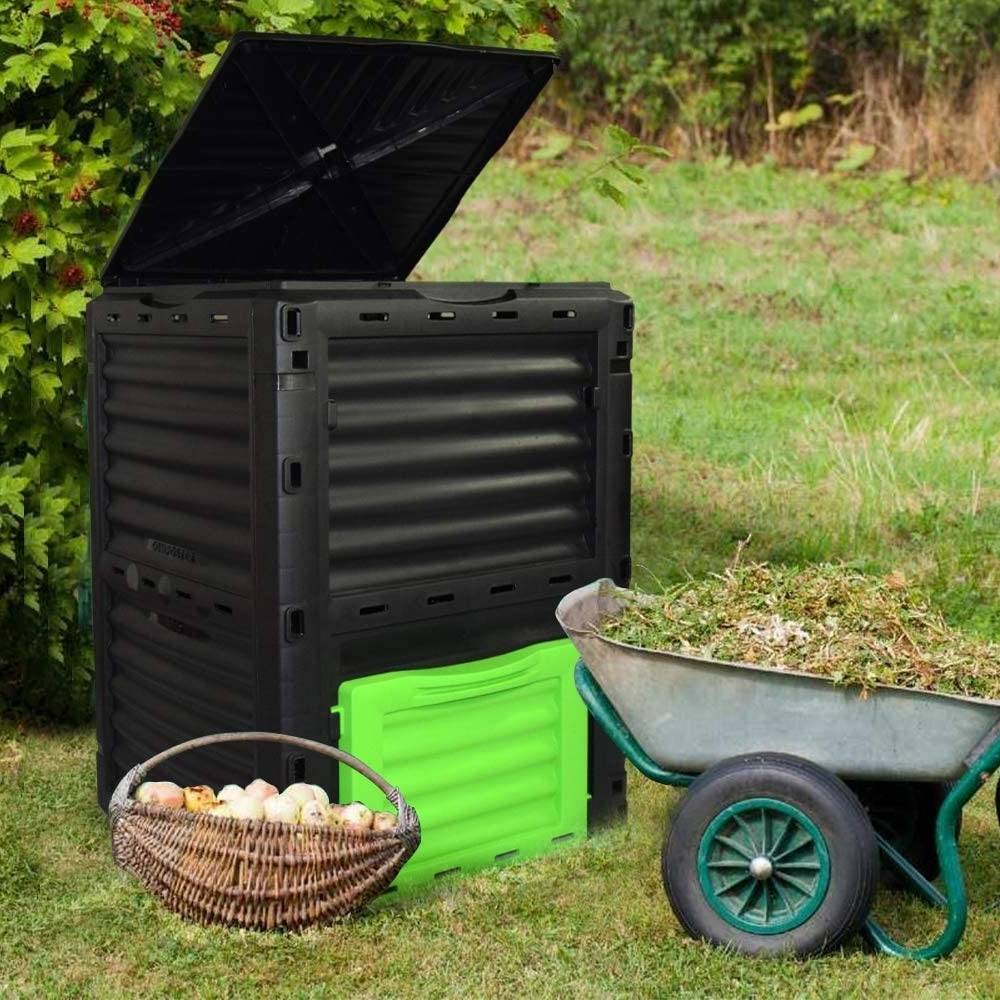
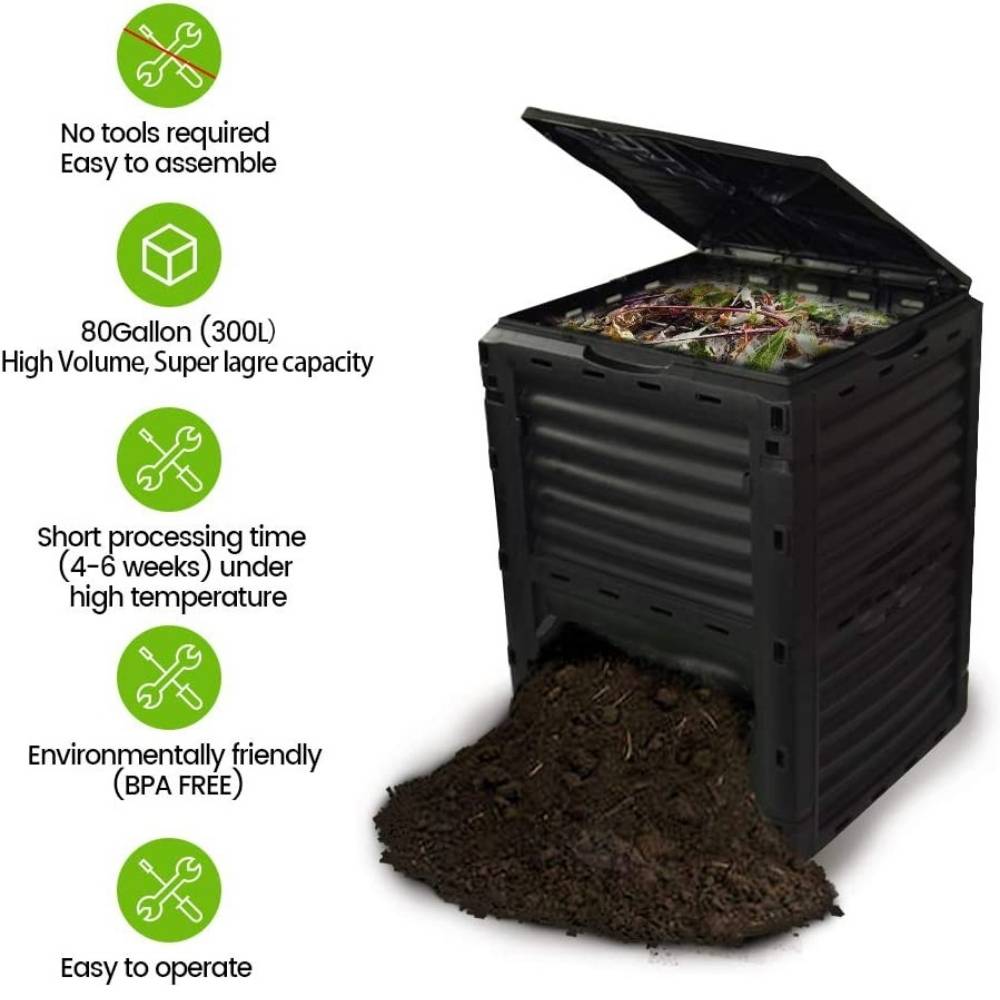
Enrich your garden beds without the need for chemical fertilisers with the 290L compost bin Easy To Install & Use. The compost bin is made of high quality & durable PP material which is environmentally safe & can withstand cold winters, perfect for gardens, farmland, yards. 290L Container
ส่งฟรีทั่วประเทศไทย
Reduce landfill, reuse waste and create organic fertiliser
Nourish your garden with oxygenated mulch
Optimised air circulation and compost processing
Secure, easy-lift lid access and mulch retrieval hatch
Reduce waste from filling landfills and eliminate the smell of decomposing fruit and vegetables from the garbage filling your kitchen while creating a nutrient-rich, pH balanced, organic fertiliser that can be used to improve your garden with the 290L Waste Recycling Aerated Compost Bin.
Aerated composting
Built with vents for optimised air circulation, this bin helps create the ideal conditions for aerobic organism activity and maintains high temperatures to hasten the decomposition of waste into compost.
Easy access hatch
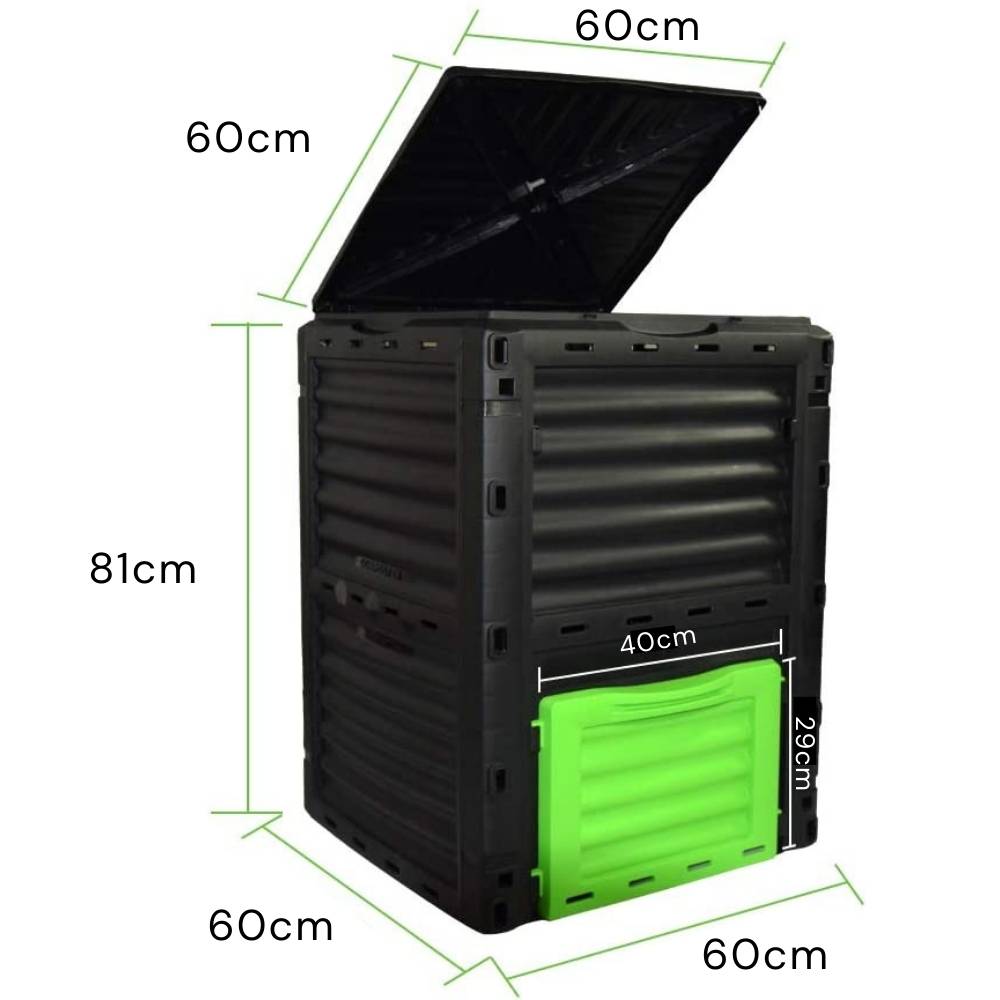
Built with dual access hatches, you can easily dump new organic matter into the top hatch and retrieve your freshly brewed compost from the bottom hatch while helping to keep pesky rats out.
290L Capacity
Made to handle everything a green thumb can throw at it, this aerated compost bin is made tough from high-impact, 90% recycled plastic resin with a 290L capacity to easily handle garden clippings and lawn trimmings, outside of regular kitchen waste.
SHORT PROCESSING TIME
This composter requires short time for composting and fermentation, only takes about 6-8 weeks to totally compost the materials to fertilizer which is directly useful in gardens, not only disposes trashes but also operate them to be useful for high efficiency of usage.
Garden Compost Bin sold online by Lawn Care Company Thailand at THB 2600 (previously THB 3100 on this store). Delivery is across Thailand, free at THB 1000 and over, otherwise THB 200. No customer rating is shown because none has been verified.
Garden Compost Bin
Composting Container
Outdoor Composter Enrich your garden beds without the need for chemical fertilisers...
The compost bin is made of high quality & durable PP material which is environmentally...